Keyport Parks Self-Guided Historical Walking Tour
Stop 1: Beach Park & Boat Ramp
NOW:
Beach Park sits along the Raritan Bay waterfront, where Keyport’s maritime identity was forged. Today it serves as a lively gathering place featuring a playground, public beach access, kayak and canoe rentals, and an active boat ramp for recreational boating. The dock continues Keyport’s long-standing maritime tradition, launching pleasure craft much as working vessels once did when the bayfront bustled with steamboats, fishing vessels, and oyster boats.
The newest addition to Beach Park is a brand-new playground and picnic area on the park’s east end, creating a welcoming space for families to relax and enjoy sweeping views of the bay while children play nearby.
Adding to the beauty of this park are three stunning Gaudí-inspired mosaic benches, crafted by the Arts Society of Keyport. Echoing the colorful, organic style made famous by Spanish architect Antoni Gaudí, these handcrafted works of public art transform simple seating into vibrant community landmarks. Each bench is a celebration of creativity, collaboration, and local pride — reminding visitors that Keyport’s story is still being written through art and civic engagement.
At the center of Beach Park is Keyport’s World War I Centennial Memorial, a grove of nine commemorative trees planted in honor of local veterans who served during the First World War. In 2018, this memorial was recognized as one of just 100 WWI Centennial Memorials nationwide, designated by the United States World War I Centennial Commission and the Pritzker Military Museum & Library. The recognition was part of the official U.S. World War I Centennial Commemoration (2017–2019), conducted in partnership with the American Legion and the Veterans of Foreign Wars of the United States.
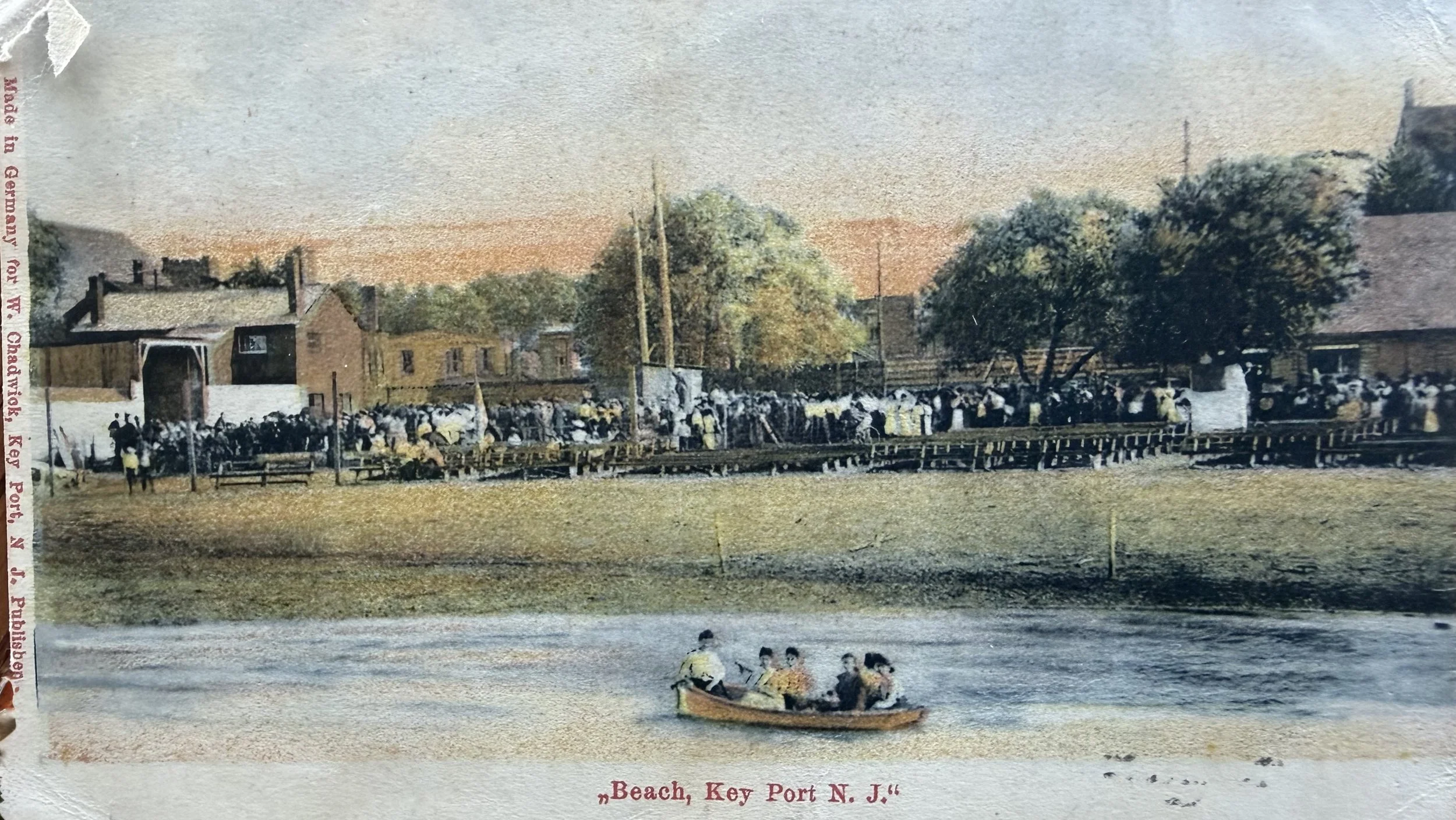
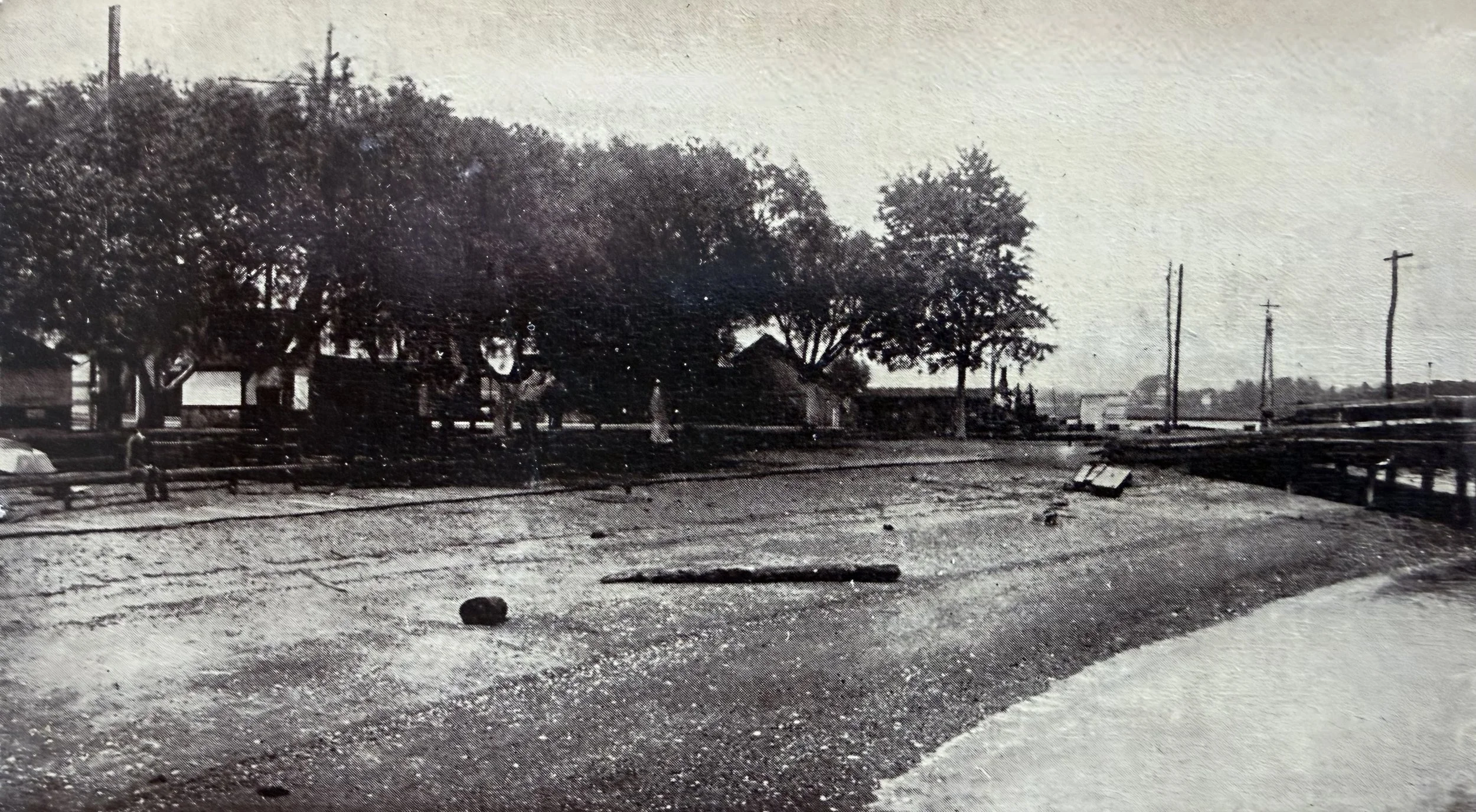
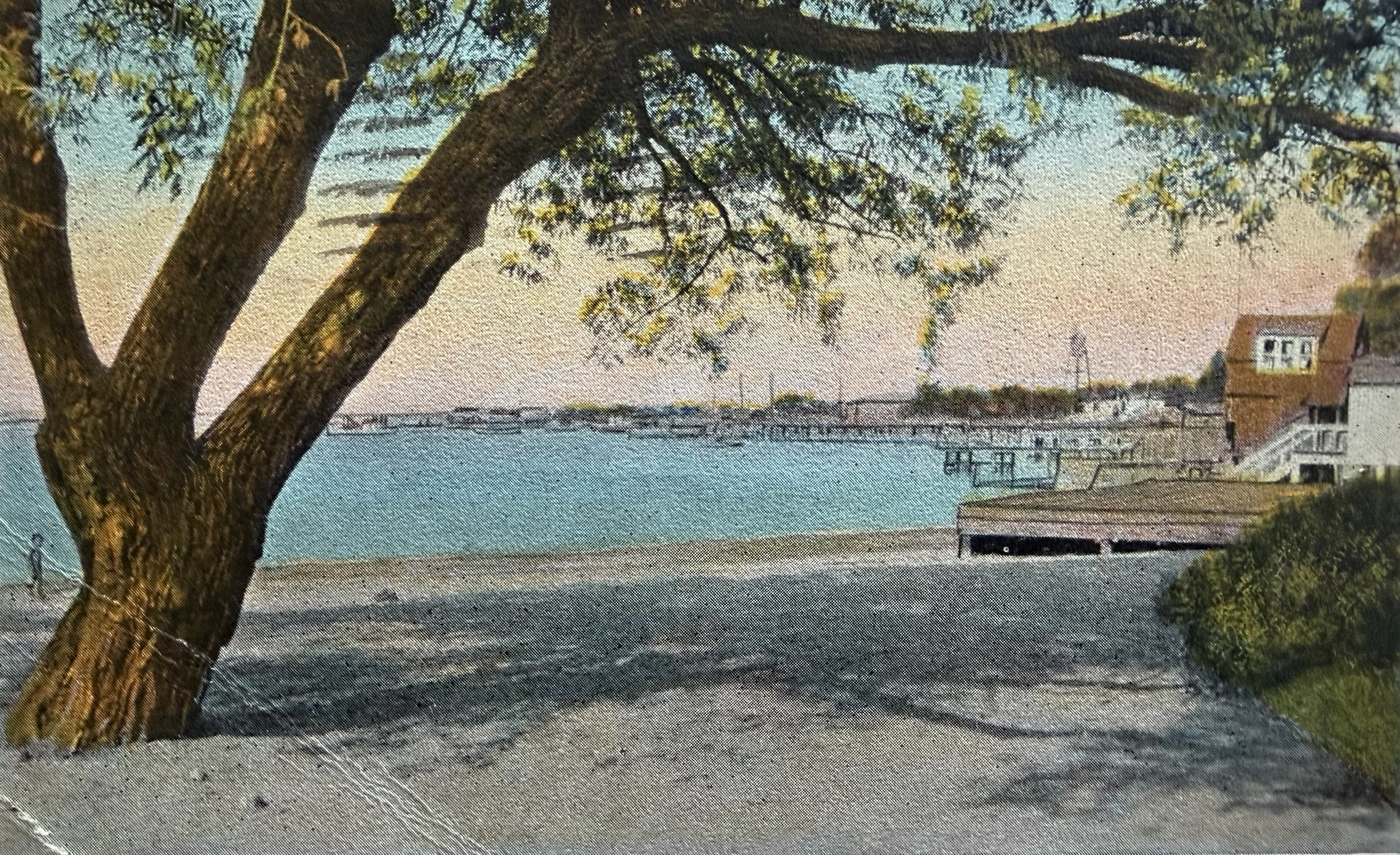
THEN:
The boat ramp was once the location of the Keyport Dock and Holmdel Dock — major steamboat terminals. Broad Street connected directly to the docks, which bustled with activity. Steamers shuttled passengers and also carried farm produce from inland Monmouth County to New York markets and returned with goods for local merchants.
The Keansburg Steamboat Company, owned by the Gelhaus family, operated ferries from the Bayshore, including the City of Keansburg, one of the last steamboats operating into the 1960s. As railroads promoted themselves as reliable 'all-weather routes,' steamboat commerce gradually declined.
Beach Park, once touted as “Little Coney Island”, featured a Pavilion used to host large township gatherings and entertainment. Across First Street, the Jersey Central Traction Office supported the trolley line connecting Perth Amboy to Campbell’s Junction. A modest steamboat dock museum built around 1950 stood nearby until it was destroyed during Superstorm Sandy.
As you sit and look across the water, imagine the layered view: steamships passing in the distance, oyster fleets on the horizon, children fishing from the shore, and today’s kayaks gliding across the same historic bay.
Standing here today, the activity on the water echoes generations past, where work, travel, and daily life once moved through this very shoreline.
Previous ← Next →
