A Digital Edition for America’s 250th
Keyport Celebrates America’s Bicentennial (1976)
1976 Original
Transcription: Page 18
the bay and throughout the war Raritan Bay teemed with British warships.
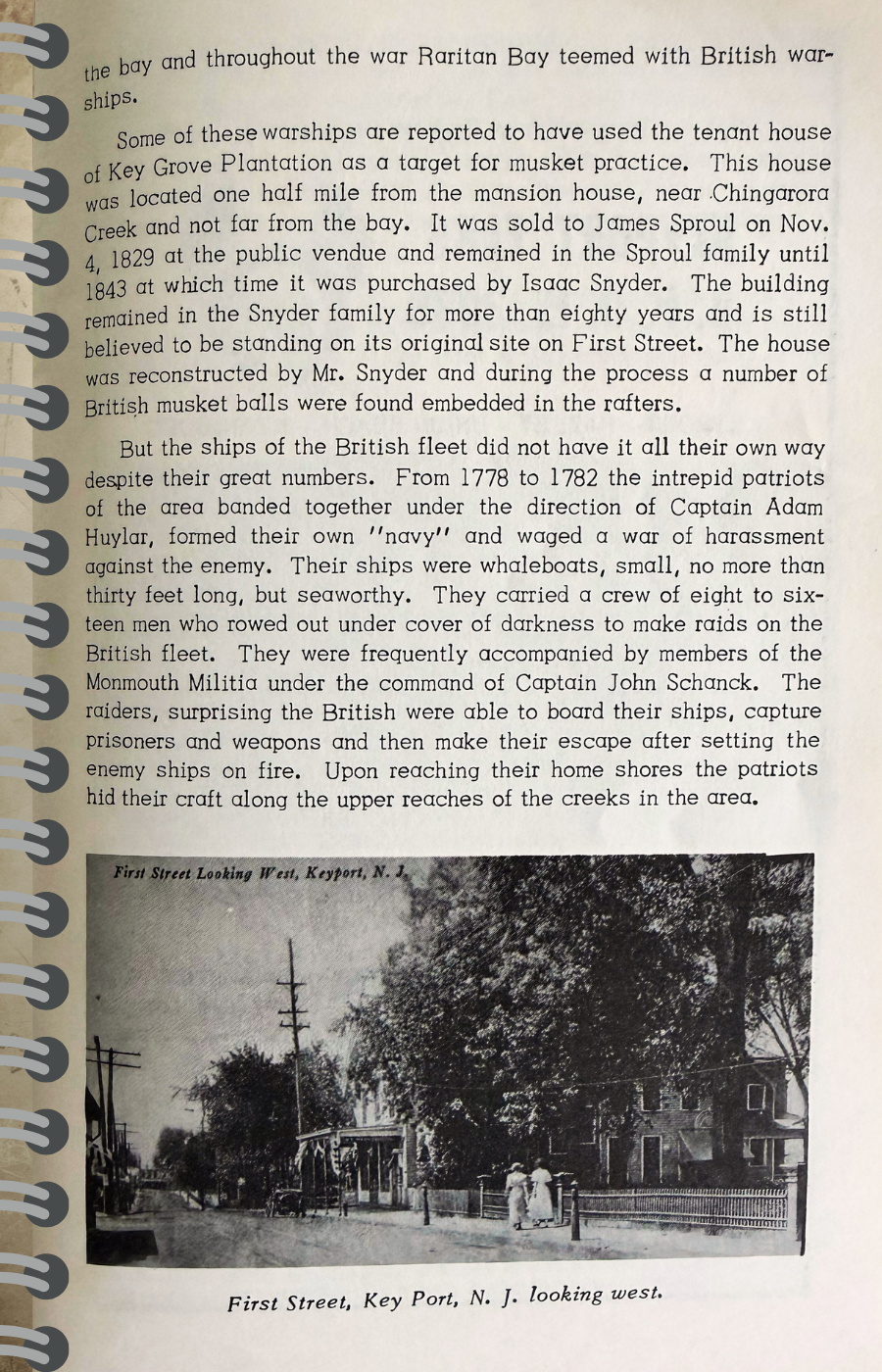
Some of these warships are reported to have used the tenant house of Key Grove Plantation as a target for musket practice. This house was located one-half mile from the mansion house, near Chingarora Creek and not far from the bay. It was sold to James Sproul on November 4, 1829, at the public vendue and remained in the Sproul family until 1843, at which time it was purchased by Isaac Snyder. The building remained in the Snyder family for more than eighty years and is still believed to be standing on its original site on First Street. The house was reconstructed by Mr. Snyder and during the process a number of British musket balls were found embedded in the rafters.
But the ships of the British fleet did not have it all their own way despite their great numbers. From 1778 to 1782 the intrepid patriots of the area banded together under the direction of Captain Adam Hylar, formed their own "navy," and waged a war of harassment against the enemy. Their ships were whaleboats, small, no more than thirty feet long, but seaworthy. They carried a crew of eight to sixteen men who rowed out under cover of darkness to make raids on the British fleet. They were frequently accompanied by members of the Monmouth Militia under the command of Captain John Schanck. The raiders, surprising the British, were able to board their ships, capture prisoners and weapons, and then make their escape after setting the enemy ships on fire. Upon reaching their home shores the patriots hid their craft along the upper reaches of the creeks in the area.
Photo Caption: First Street, Key Port, N.J. looking west.