The Story Behind the Great Whaleboat Race
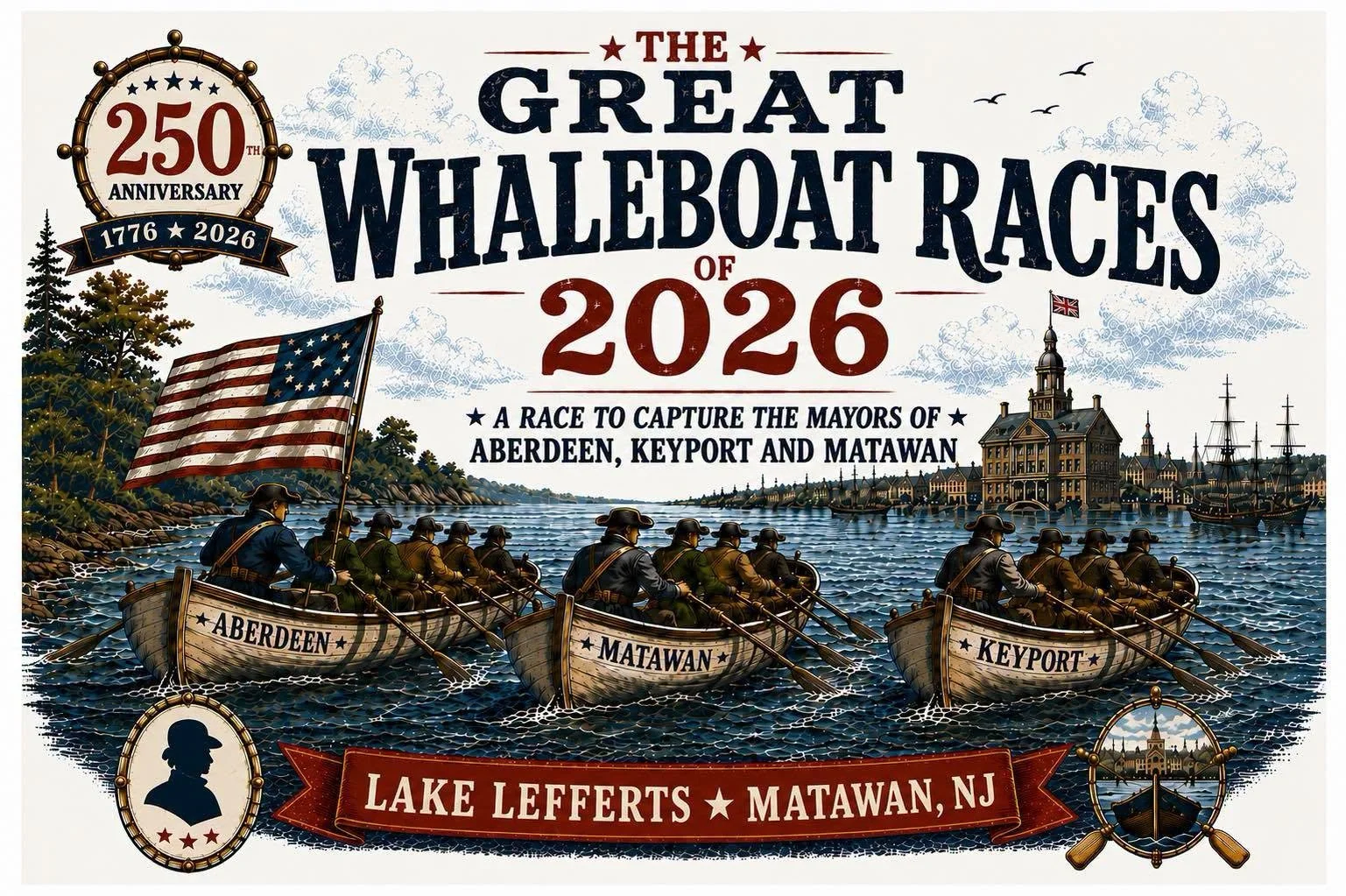
Whaleboats, Revolutionary raids, and the Bayshore's waters
When the Keyport Historical Society helped bring the Great Whaleboat Races to Lake Lefferts in 2026, the event was more than a friendly competition between three neighboring towns.
It was a chance to bring an important—and often overlooked—part of our local Revolutionary history back to the water.
Today, we think of a whaleboat as a historic boat, perhaps something we'd see in a maritime museum. But during the American Revolution, a whaleboat could be a weapon.
These long, relatively light, oar-powered boats were fast, maneuverable, and able to operate close to shore and in shallow waters. During the Revolution, American forces used them for much more than hunting whales. They carried out nighttime raids, captured supplies and prisoners, harassed British shipping, and struck quickly along the waterways surrounding New York and New Jersey.
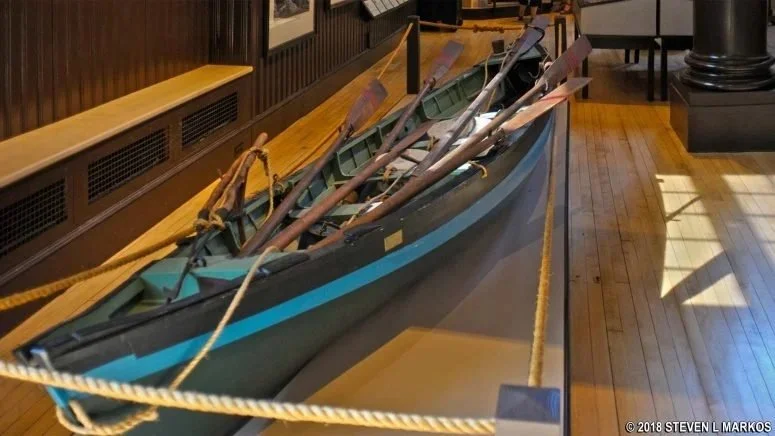
Courtesy of New Bedford Whaling Museum
The waters of Lower New York Bay, the Jersey Shore, and Long Island became important territory in what became known as the Whaleboat War.
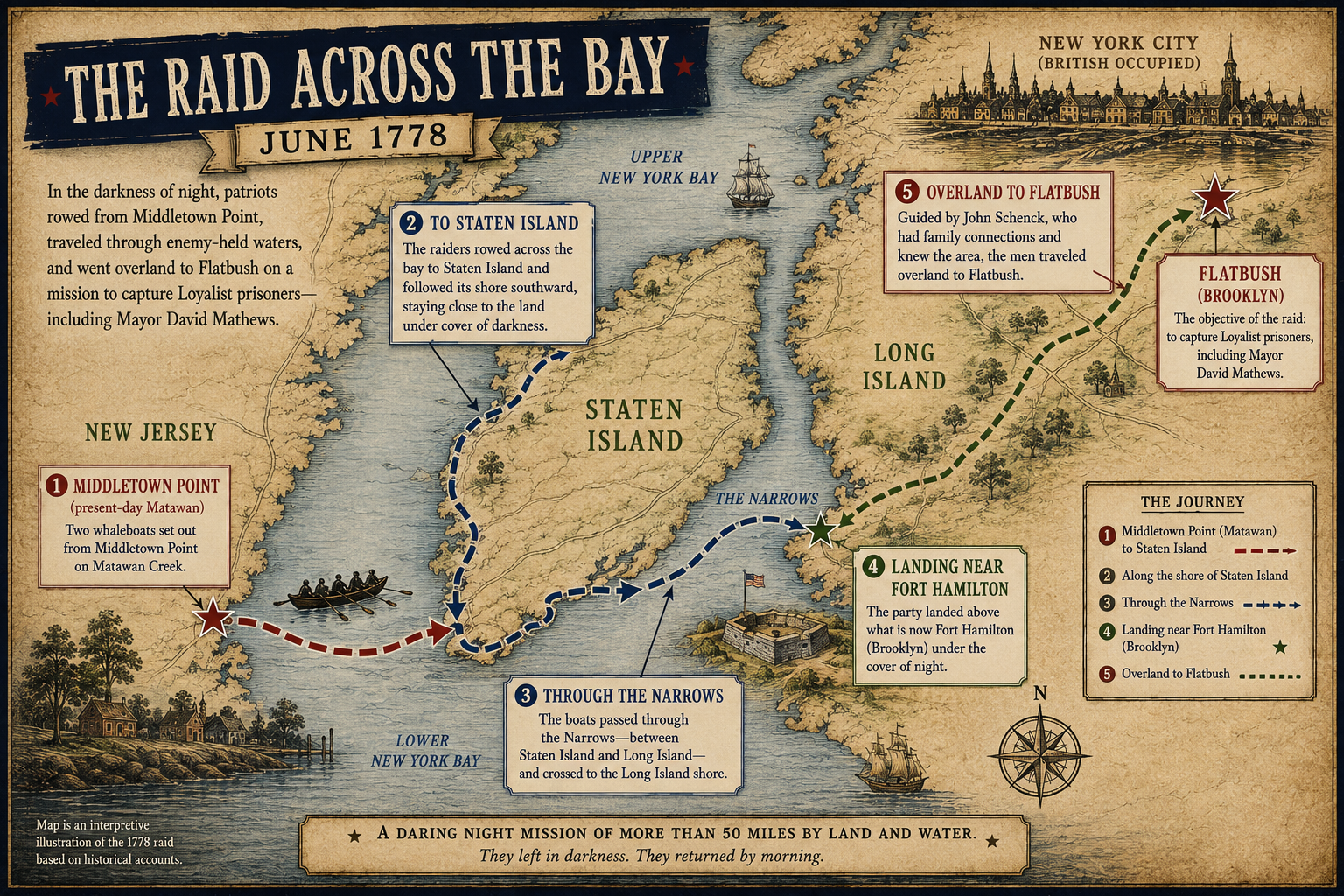
Map is an interpretive illustration of the 1778 raid based on historical accounts
And here's where our story gets local.
A Raid to Capture the Mayor
In June 1778, the British occupied New York City and much of Long Island. Across the bay, American patriots along the New Jersey shore were fighting back—and using whaleboats to do it.
From Middletown Point, William Marriner and militia captain John Schenck led a group of men on a daring nighttime expedition toward British-held Long Island.
Their target?
David Mathews, the Loyalist Mayor of New York City.
Under cover of darkness, the raiders rowed across to Staten Island, followed the shore toward the Narrows, crossed to Long Island, and landed near what is now Fort Hamilton.
But their journey wasn't over.
John Schenck knew the area and guided the men overland toward their target. They reached Flatbush around midnight.
There was just one problem.
Mayor Mathews wasn't home.
Mission accomplished? Not quite.
The raiders didn't leave empty-handed. They captured Major James Moncrieff, a British officer, and Theophilus Bache, a prominent Loyalist, before beginning the long journey back to New Jersey.
By the following morning, they had returned to Middletown Point—after traveling more than 50 miles by land and water.
A daring raid.
A remarkable journey.
And a story that began right here on the Bayshore.
At the time, Middletown Point was the important waterfront community serving the surrounding area that today includes Keyport, Matawan, and Aberdeen.
The Men Behind the Raid
The whaleboats were ready. The plan was daring. But who were the men behind the raid?
William Marriner and John Schenck were very different men, but each brought experience and local knowledge that made the expedition possible.
William Marriner was a daring mariner who would become one of New Jersey's most successful privateers. He knew the waters between Sandy Hook and the Narrows, and his small boats allowed him to move quickly and quietly where larger vessels could not. British authorities eventually took notice, warning that Marriner was operating in the area.
John Schenck was different—but just as important.
He was a militia captain, a local military leader willing to take the fight to the enemy.
And this wasn't his only encounter with the British.
Three years later, during the June 1781 British and Loyalist incursion into Middletown, Schenck was again serving with the militia. According to his later pension testimony, the British and Tories had offered a 25-guinea reward for his capture or death.
They even attacked his house while he was away with the militia.
Schenck was clearly a man the enemy knew—and feared.
But the raid of 1778 wasn't just about two men.
It depended on boats, local knowledge, and a community connected to the water.
From Middletown Point, men could launch small boats into Raritan Bay and reach the waterways around New York Harbor.
And the whaleboat gave them an extraordinary advantage:
Speed.
Stealth.
Surprise.
Think about it.
Two boats.
A moonless night.
A crossing of the bay.
Enemy territory.
And a return trip before the British could stop them.
This wasn't a story happening somewhere far away.
It began here.
And it wouldn't be the last time men from the Bayshore used whaleboats to take the fight to the enemy.
A few years later, another name would become famous on these waters.
Adam Hyler.
Adam Hyler: The Whaleboat Privateer of Raritan Bay
The story didn't end with the 1778 raid on Flatbush.
A few years later, another whaleboat commander would make the waters of Raritan Bay, Sandy Hook, and New York Harbor a dangerous place for British and Loyalist vessels.
His name was Captain Adam Hyler.
Historian Michael Adelberg, who recently presented to the Keyport and Matawan Historical Societies, has brought together an extraordinary account of this little-known Revolutionary figure—and his deep connections to the Monmouth County Bayshore.
Hyler was born in Germany and was associated with New Brunswick during the Revolution. But his story is very much a Bayshore story.
And there's a connection to a man you've already met:
William Marriner.
Marriner was captured by the British in 1780. Hyler appears to have served in Marriner's privateering activities and soon filled the void left by Marriner's capture. In fact, Hyler's first recorded action in April 1781 was initially credited to Marriner—who was still a British prisoner at the time.
By 1781, Hyler was making a name of his own.
His weapon of choice?
The whaleboat.
Fast. Shallow. Quiet.
It could be rowed or sailed, slip over sandbars that stopped larger vessels, and move silently through creeks and shallow bays. Hyler's crews were particularly skilled at the oars—and at striking by surprise.
Then came Sandy Hook.
On October 7, 1781, Hyler went after five vessels near the Hook with one gunboat and two whaleboats—within a quarter mile of a British guard ship.
Two of the vessels were armed.
After a fifteen-minute fight, Hyler captured all five without losing a man.
And this is where our own community enters the story.
Hyler frequently used Middletown Point as a point of departure and return, and many of his men came from Monmouth County. Of nine men whose later accounts of serving under Hyler survive, four were from Monmouth County.
In one pursuit, Hyler chased the sloop Father's Desire across Raritan Bay until it grounded near Keyport.
And when Hyler captured the heavily armed British cutter Alert in April 1782, the prisoners were sent to Middletown Point.
Then came another remarkable encounter.
In May 1782, 25 British troops were sent into the Shrewsbury River to intercept Hyler.
Hyler spotted them first.
He landed thirteen of his men.
They charged.
Four British soldiers were killed or wounded—and Captain Schaack and eight of his men were captured.
But Hyler's story was not without a darker side. His privateering included the capture and forced removal of civilians and sailors, and his treatment of captured African American sailors is part of the complicated history of Revolutionary-era privateering.
By the summer of 1782, Hyler's luck ran out.
On July 15, he attacked a British galley at Prince's Bay on Staten Island. During the action, Hyler was wounded. He died later that year.
His career had lasted only a short time.
But what a career it was.
Whaleboats.
Night raids.
Sandy Hook.
Raritan Bay.
The Narrows.
Middletown Point.
The Revolution Was Happening on Our Water
The Revolutionary War wasn't happening somewhere far away.
It was happening on our water.
The waterways that surround our communities today were once routes for daring nighttime expeditions, surprise attacks, and the movement of men and supplies during a very real conflict.
That history is what inspired the Great Whaleboat Races.
When Keyport, Matawan, and Aberdeen put their whaleboats on the water at Lake Lefferts, the mission was thankfully much more peaceful.
But the race gave us an opportunity to remember the men who once depended upon these boats—and the remarkable maritime history shared by our Bayshore communities.
Nearly 250 years later:
Three towns.
Three boats.
One Golden Oar.
A friendly competition today.
A remarkable piece of Bayshore history brought back to life.
And if you’d like to see how the race ended, watch the exciting finish as the teams race to raise their town flags. WATCH THE FINISH
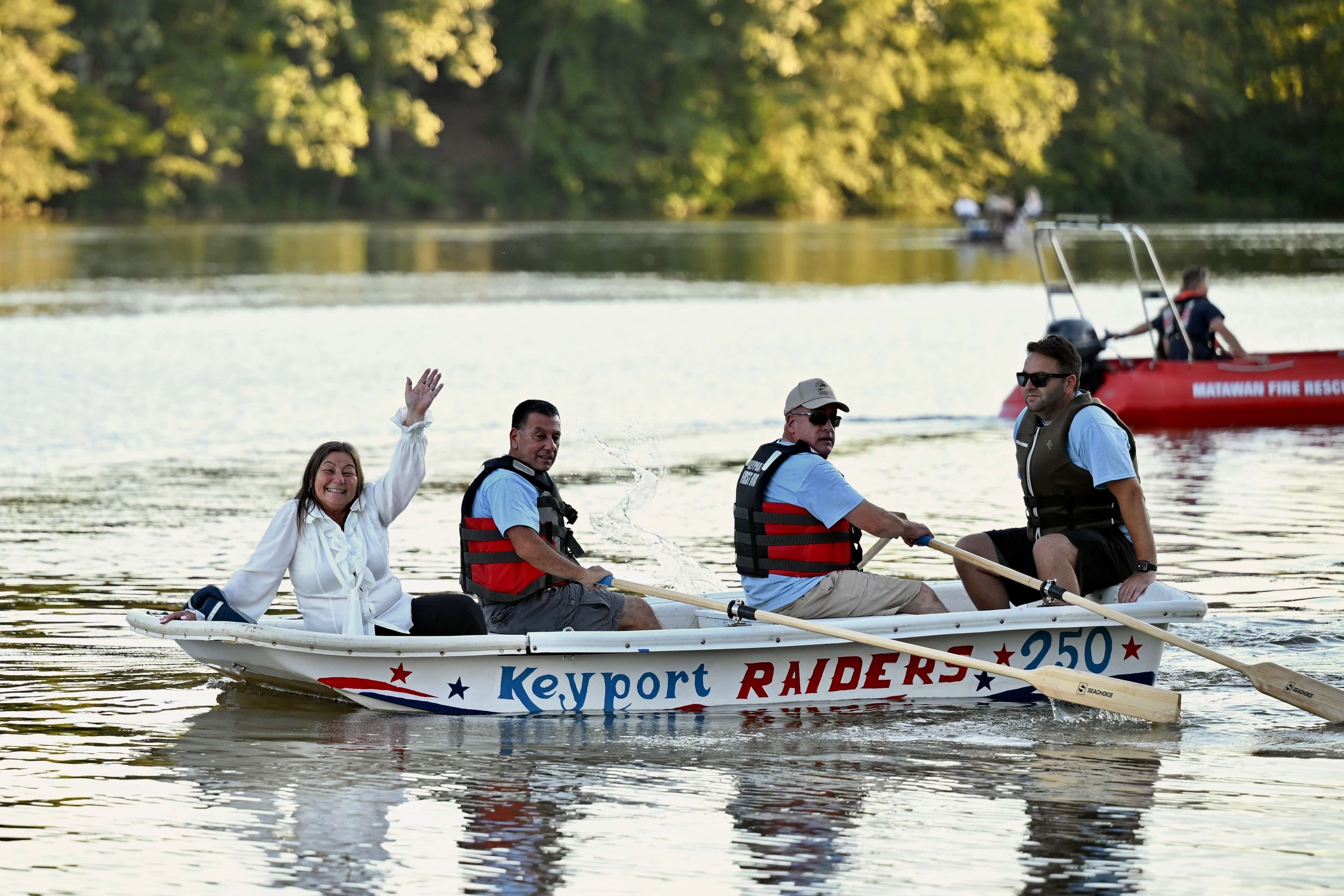
The Great Whaleboat Races of 2026
Saturday, August 29, 2026